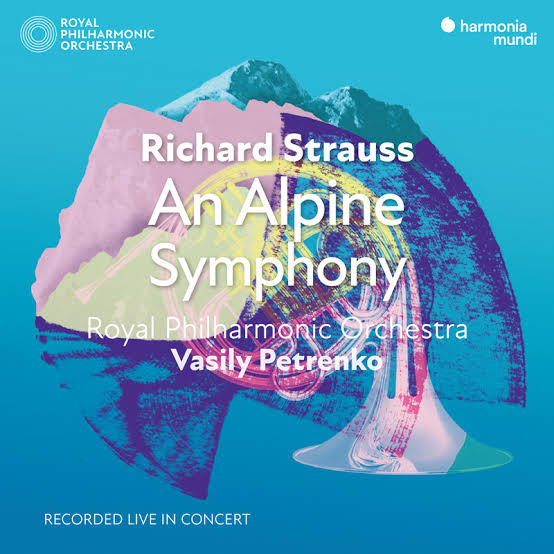
“As we prepared the countdown to our 80th anniversary season, there was one journey that I was determined to make. Musicians sometimes talk about tackling the summits of the repertoire, and what musical peak is more spectacular than Richard Strauss’ An Alpine Symphony? This colossal, single-movement work, premiered in 1915, is one of the most glorious feats of orchestration ever created and it represents not just a journey through the Alps, but the whole trajectory of our civilization, our culture. Whilst recordings made by the Royal Philharmonic Orchestra have been enjoyed by millions of people around the world for decades, this new album release with harmonia mundi represents a significant milestone; it shows the scale of creative ambition we have for our new recording partnership.”
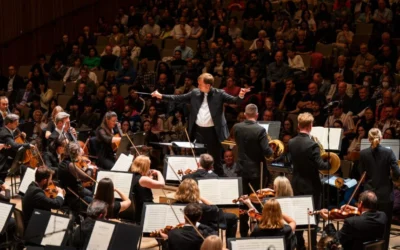
“Live recordings are quite different to studio recordings. Studio recordings, of course, have a massive benefit of being able to listen and improve the sound, precision, ensemble, balance and cohesion immediately and achieve quality as close to ideal as it is possible. With a live recording you have the public. And the audience is vital and one of the most important parts of the performance. So, with live recordings the musicians are playing for the public and, of course, they play differently than when they’re playing in an empty hall, which you do with the studio recordings. So live recordings have a lot of pros. There is a greater adrenaline rush, a sense of moment and an appreciation of the importance of the performance. This is more in the veins of musicians that would be the case with studio recordings. For studio recordings, you don’t have the eyes looking on you. And then, quite often, you have to repeat material several times and to keep the same level of intensity in the studio can be much more difficult.”